Leak detection in Glasgow
Caledonian Leak Detection finds hidden water leaks in Glasgow homes, tenement flats and businesses across the G postcode area, locating each leak before a floor or ceiling is opened.

Illustration: a Glasgow tenement street, with a leak showing on the pavement outside the close.
Which parts of Glasgow does Caledonian Leak Detection cover?
Caledonian Leak Detection covers all 50 G postcode districts, listed below by district code and post town.
The G area reaches past the city boundary to take in Clydebank, Dumbarton, Alexandria and Helensburgh, so a flat in the city and a house on the Clyde coast both come under the Glasgow page. Paisley and Renfrew sit in the PA area, and Hamilton and Motherwell in ML: you will find them, with every other covered town, on the areas covered page.
G: Glasgow
- G1 Glasgow
- G2 Glasgow
- G3 Glasgow
- G4 Glasgow
- G5 Glasgow
- G11 Glasgow
- G12 Glasgow
- G13 Glasgow
- G14 Glasgow
- G15 Glasgow
- G20 Glasgow
- G21 Glasgow
- G22 Glasgow
- G23 Glasgow
- G31 Glasgow
- G32 Glasgow
- G33 Glasgow
- G34 Glasgow
- G40 Glasgow
- G41 Glasgow
- G42 Glasgow
- G43 Glasgow
- G44 Glasgow
- G45 Glasgow
- G46 Glasgow
- G51 Glasgow
- G52 Glasgow
- G53 Glasgow
- G60 Glasgow
- G61 Glasgow
- G62 Glasgow
- G63 Glasgow
- G64 Glasgow
- G65 Glasgow
- G66 Glasgow
- G67 Glasgow
- G68 Glasgow
- G69 Glasgow
- G71 Glasgow
- G72 Glasgow
- G73 Glasgow
- G74 Glasgow
- G75 Glasgow
- G76 Glasgow
- G77 Glasgow
- G78 Glasgow
- G81 Clydebank
- G82 Dumbarton
- G83 Alexandria, Arrochar
- G84 Helensburgh
Why are leaks in Glasgow tenements hard to trace?
Leaks in Glasgow tenements are hard to trace because water from one flat travels through floors, walls and shared pipes before it shows in another, so the stain can appear in a different flat from the one with the leak.
Most of the city's older flats sit in sandstone tenements with timber floors. Water that escapes under a timber floor can run along the joists before it marks a ceiling, which is why the first sign is sometimes in the flat below rather than the one with the leaking pipe.
Rather than lifting boards in every flat up the close, the search starts with the pipework: each flat's supply is isolated and pressure tested, the leak is narrowed down with thermal imaging, acoustic listening or tracer gas, and its position is marked on the surface, the same sequence used for hidden leak detection for water pipes in any Scottish home.
Who arranges a repair in a Glasgow tenement?
The title deeds usually set out who is responsible for each part of a tenement and how the cost of a common repair is split. Where the deeds say nothing, the Tenement Management Scheme (the default rules in the Tenements (Scotland) Act 2004) applies, and copies of the deeds come from the Registers of Scotland.
If the close has a property factor (the firm or person who manages the common parts for the owners), that factor must be listed on the public Property Factor Register and follow a statutory code of conduct, so the register is the place to check who to chase up. Tenants report a leak to their landlord, who arranges the repair.
Which leak detection services are available in Glasgow?
Glasgow properties can have all four investigations: hidden pipe leaks, central heating leaks, underground supply pipe leaks and trace and access for insurance claims.
Hidden pipe leaks
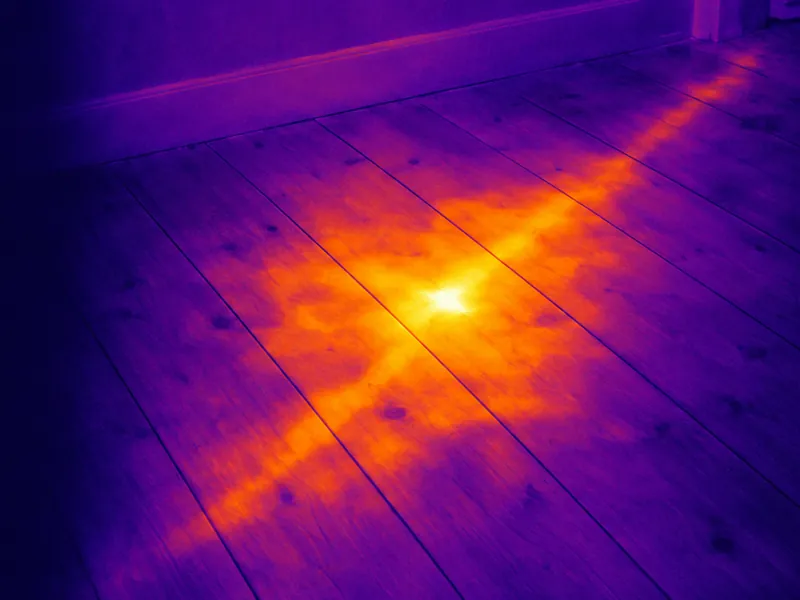
In a Glasgow tenement flat, water from a pipe under the floorboards can reach the ceiling below before it shows in yours, and hidden pipe leak detection traces it from the surface.
Central heating leaks
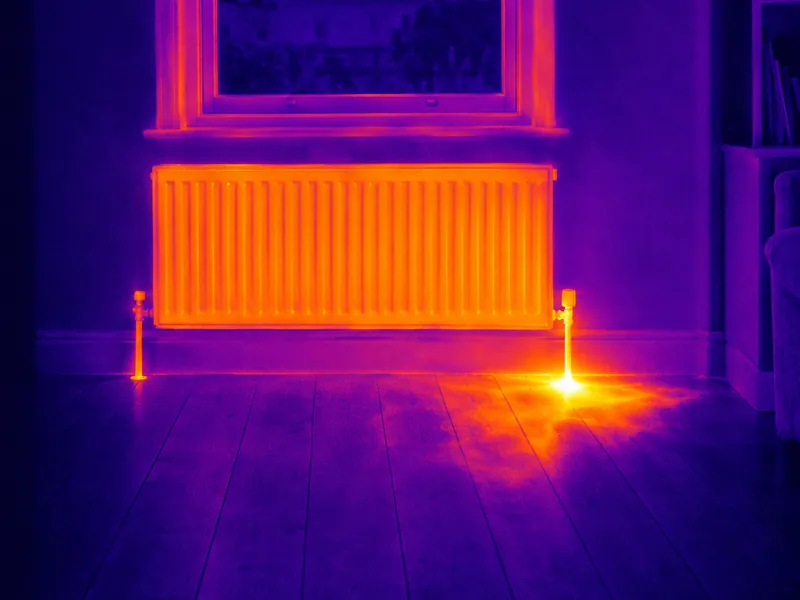
A boiler that needs topping up once a month or more could have a small leak, Ideal says, and central heating leak detection tests the circuit and follows its pipe runs to find it.
Underground supply pipe leaks
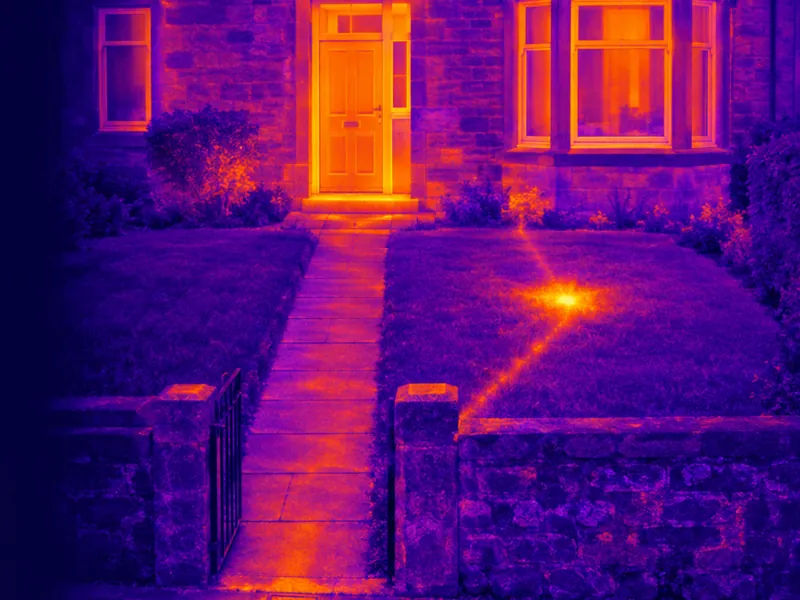
Between the stopcock under a Glasgow pavement and your internal stop valve, the supply pipe is yours to sort out, and underground water leak detection finds a leak on it before the path is dug up.
Leaks traced for an insurance claim

When water from your flat has stained the ceiling below and the insurer wants its source found first, trace and access leak detection gives them the location, the access work needed and photographs.
How leak detection in Scotland works, from the five methods to who owns which pipe, is set out on the home page.
Where does Glasgow's water come from?
Glasgow's water comes from Loch Katrine, through Victorian aqueducts to the Milngavie treatment works, and Scottish Water looks after that network up to and including the stopcock outside each property.
The stopcock (the valve where the public pipe meets yours, usually near the boundary) is the dividing line. Scottish Water maintains the main, the communication pipe and the stopcock itself. The supply pipe from there to your internal stop valve, and everything inside, belongs to the owner, even where it runs beyond the boundary, and where several flats share one supply pipe the owners on it may be jointly liable. Before anyone digs, it pays to know who is responsible for an underground leak.